Haldi, mehndi, sangeet, pheras: sharing photos from a four-day wedding
Indian weddings span several functions and hundreds of guests. A practical guide to sharing photos across every function without losing track.
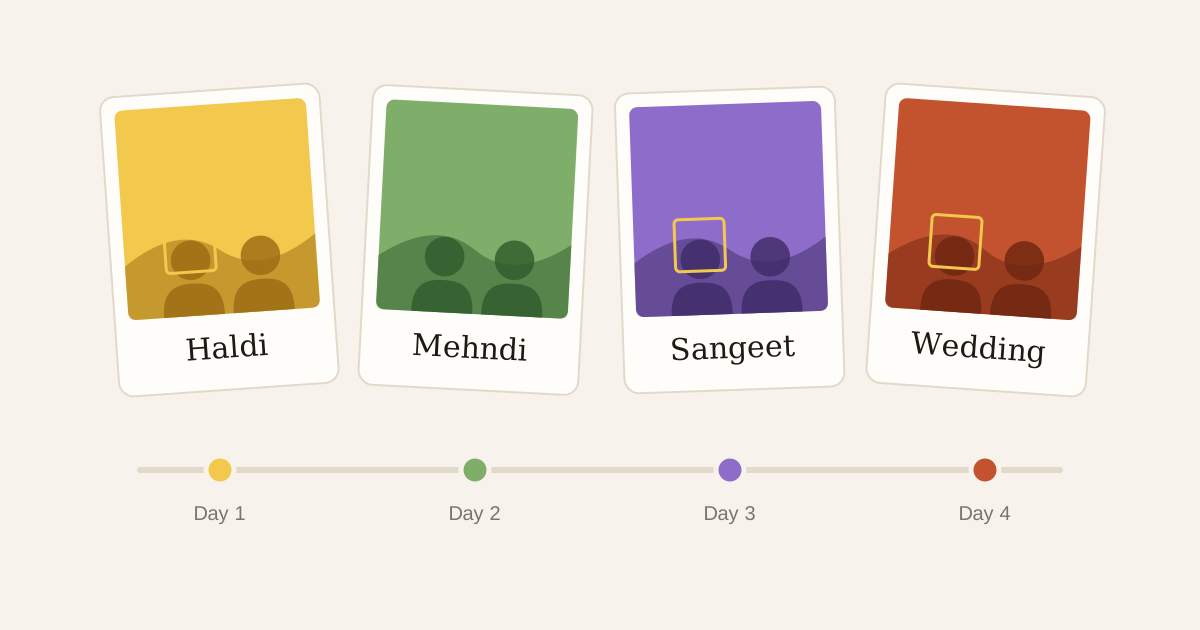
An Indian wedding isn't one event. It's four or five, sometimes more, spread over several days and often more than one venue. Each function has its own crowd, its own colours and its own photographer schedule.
The haldi is close family in old clothes, laughing and covered in turmeric. The mehndi is long, slow and full of women sitting for hours. The sangeet is the loud one, with choreographed performances that the cousins rehearsed for weeks. The wedding itself is the most formal, and the reception is where the extended network turns up, shakes hands and leaves.
That's a lot of photos. More importantly, it's a lot of different people in different photos.
Different guests, different functions
Not everyone attends everything. The bride's college friends might come for the sangeet and the wedding. A colleague might only attend the reception. Some relatives fly in on day one and leave after the pheras.
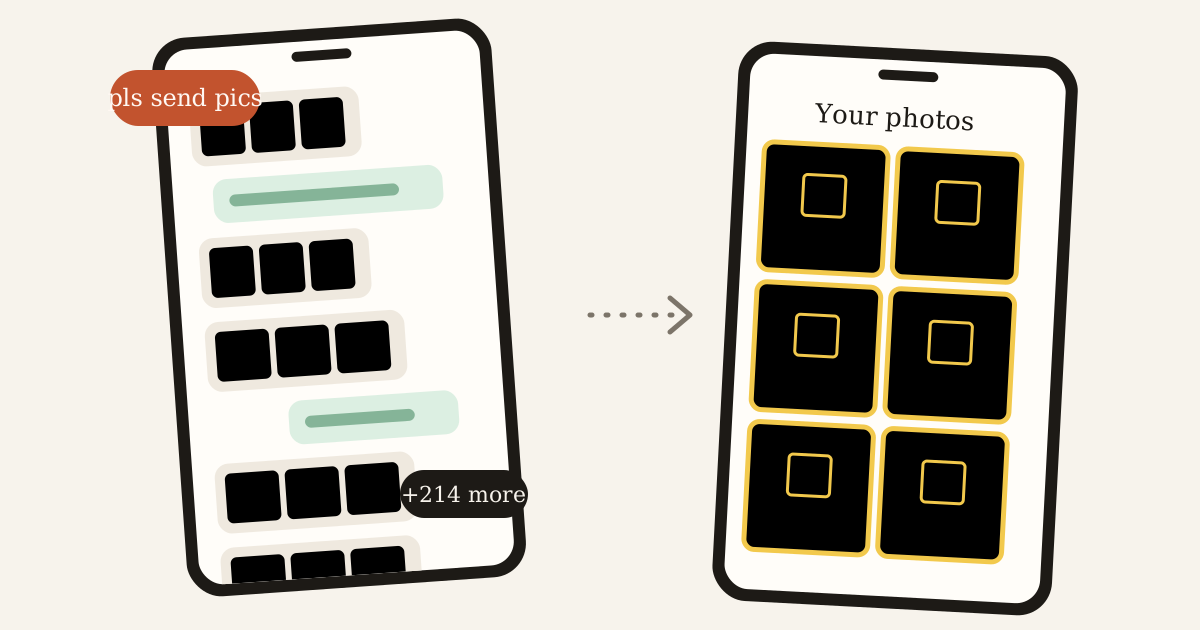
When photos are shared as one big folder per function, each guest has to work out which functions they were at and then search each one. It's a chore, and it's the reason a lot of people never get past the first folder.
One place per guest, across every function
The simplest setup is to let each guest's gallery follow them across functions. Once someone has added their face, they get matched in every function they joined, so a cousin who danced at the sangeet and stood in the baraat sees both, without hunting through two albums.
Photographers can set the wedding up as separate events if they prefer to deliver function by function. Guests join each one with its own invite link, and their profile keeps them together. Either way, nobody needs to know which folder to look in.
Colour is the hard part, faces are not
Photographers sometimes worry that haldi or Holi-style functions will throw off face detection, with turmeric on faces or heavy mehndi lighting. In practice, faces stay recognisable through a surprising amount, and the 360° selfie set helps with the angles. For the odd frame where someone is completely covered or turned away, the photographer can tag them by hand.
A rough plan that works
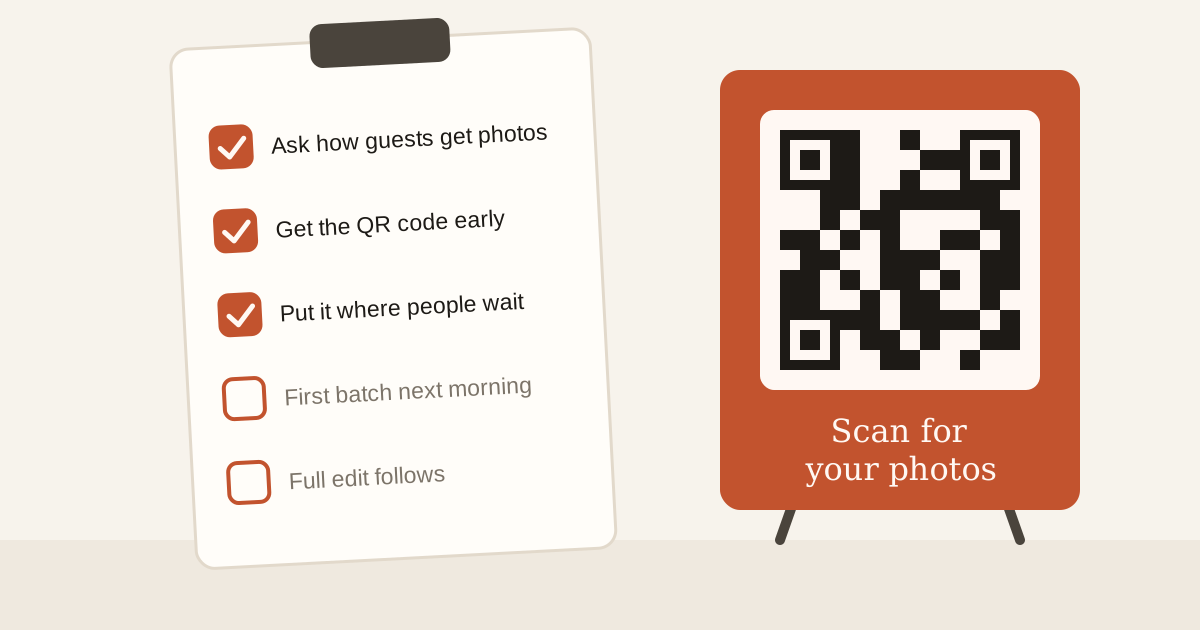
- Before the first function: share the invite link in the family group and on the welcome board. Ask people to add their selfies early.
- Each night: the photographer uploads a set of quick picks. Guests wake up to photos from the night before, which is when they most want them.
- After the edit: the full, edited set goes up. Matches update automatically.
- For the couple and parents: host access lets them see every function in full, not only the photos they're in.
The relatives who aren't at the wedding
One nice side effect: when guests get their photos quickly, they share them with family who couldn't make it. The grandparent who couldn't travel sees the sangeet the next morning. That reach used to depend on someone remembering to forward things. Now it mostly takes care of itself.
Shooting an event soon?
Upload once and every guest gets a private gallery of the photos they're in.